Camellia
Camellia japonica — Japanese Camellia
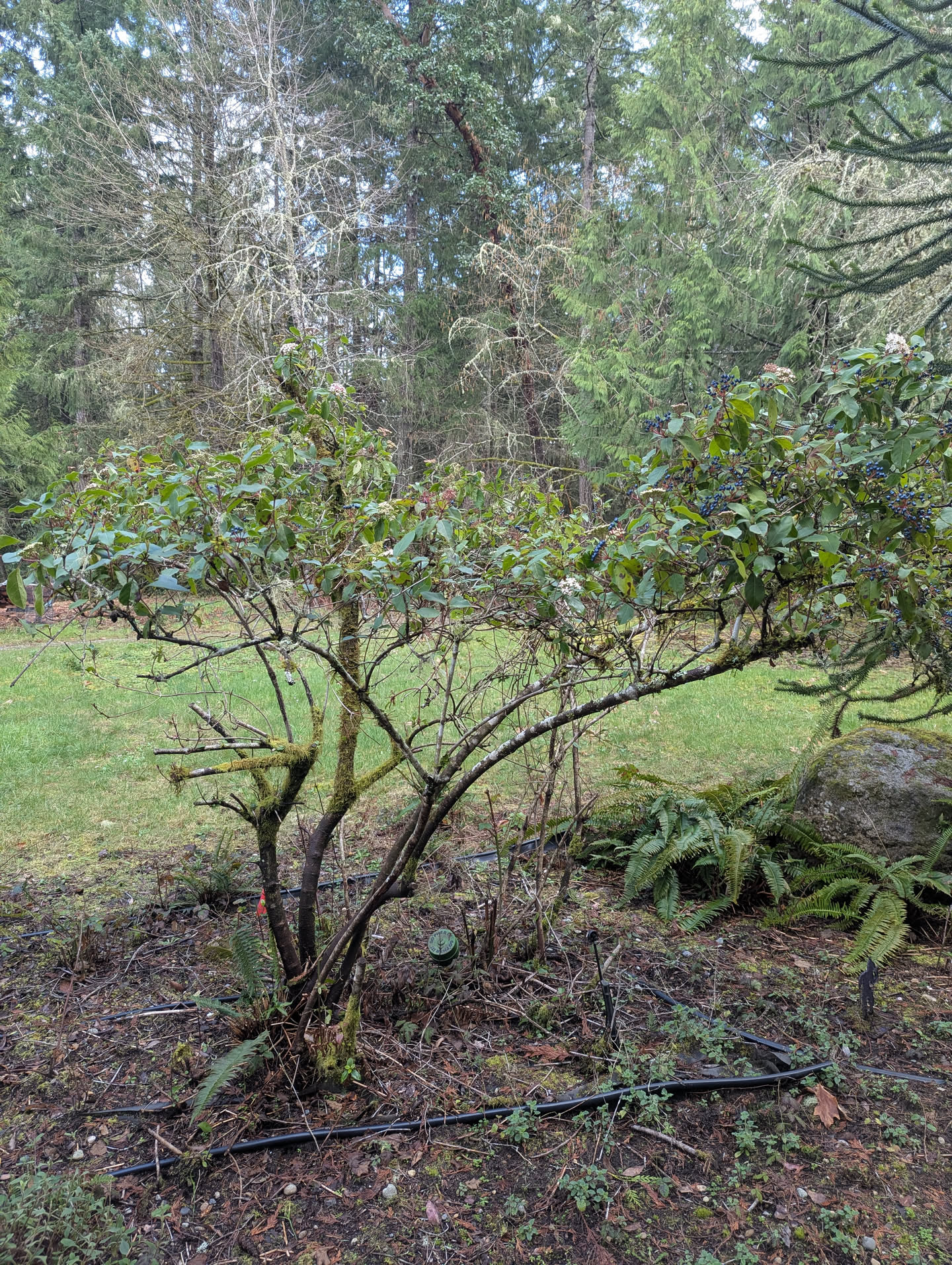
Photo: March 20, 2026 — multi-stemmed shrub showing characteristic dark glossy leaves; drip irrigation line at base. Large-leaved plant (possibly Fatsia japonica) visible lower right, conifers behind.
About
Camellia japonica is a classic evergreen ornamental shrub prized for its stunning flowers (typically mid-winter to spring) and lustrous dark foliage. This specimen in the Monkey Puzzle Strip has established well and benefits from the sheltered, partially shaded microclimate under the conifers. The drip irrigation at its base indicates it is actively tended.
Key Characteristics
- Type: Evergreen shrub / small tree, family Theaceae
- Flowers: Typically mid-winter to spring (January–April in the Pacific Northwest); single, semi-double, or double; white, pink, red, or variegated
- Foliage: Small-medium oval, glossy dark green leaves — very distinctive
- Size: Usually 2–5 m; slow to moderate growth
- Form: Upright to spreading, multi-stemmed
Care Notes
| Aspect | Details |
|---|---|
| Hardiness | Hardy to about −10°C (Zone 7); sheltered position important |
| Soil | Acidic (pH 5.5–6.5), humus-rich, well-drained but moisture-retentive |
| Sun | Dappled shade to morning sun; avoid hot afternoon sun (bleaches flowers) and harsh east winds (thaws frozen buds too quickly) |
| Watering | Regular watering, especially when establishing and during dry spells; drip irrigation ideal |
| Pruning | Light shaping after flowering; remove dead or crossing stems |
| Fertilising | Ericaceous fertiliser after flowering; avoid overfeeding with nitrogen (promotes leaf at expense of flower) |
| Mulching | Mulch annually with bark, leaf mould, or pine needles — do not bury the stem |
| Pests | Vine weevil (look for notched leaf edges); scale insects; occasionally honey fungus on stressed plants |
Notes
- Bud drop is common when conditions change suddenly (temperature fluctuation, drought, or overwatering) — keep conditions stable
- Avoid moving an established plant if possible
- Deadhead spent flowers to keep tidy and prevent petal blight spread
- The cultivar/flower colour of this specimen is not yet documented — photograph when in bloom
Action Needed
- Photograph flowers when in bloom to confirm cultivar
- Note flower colour and form for identification