Lilac
Syringa vulgaris — Common Lilac
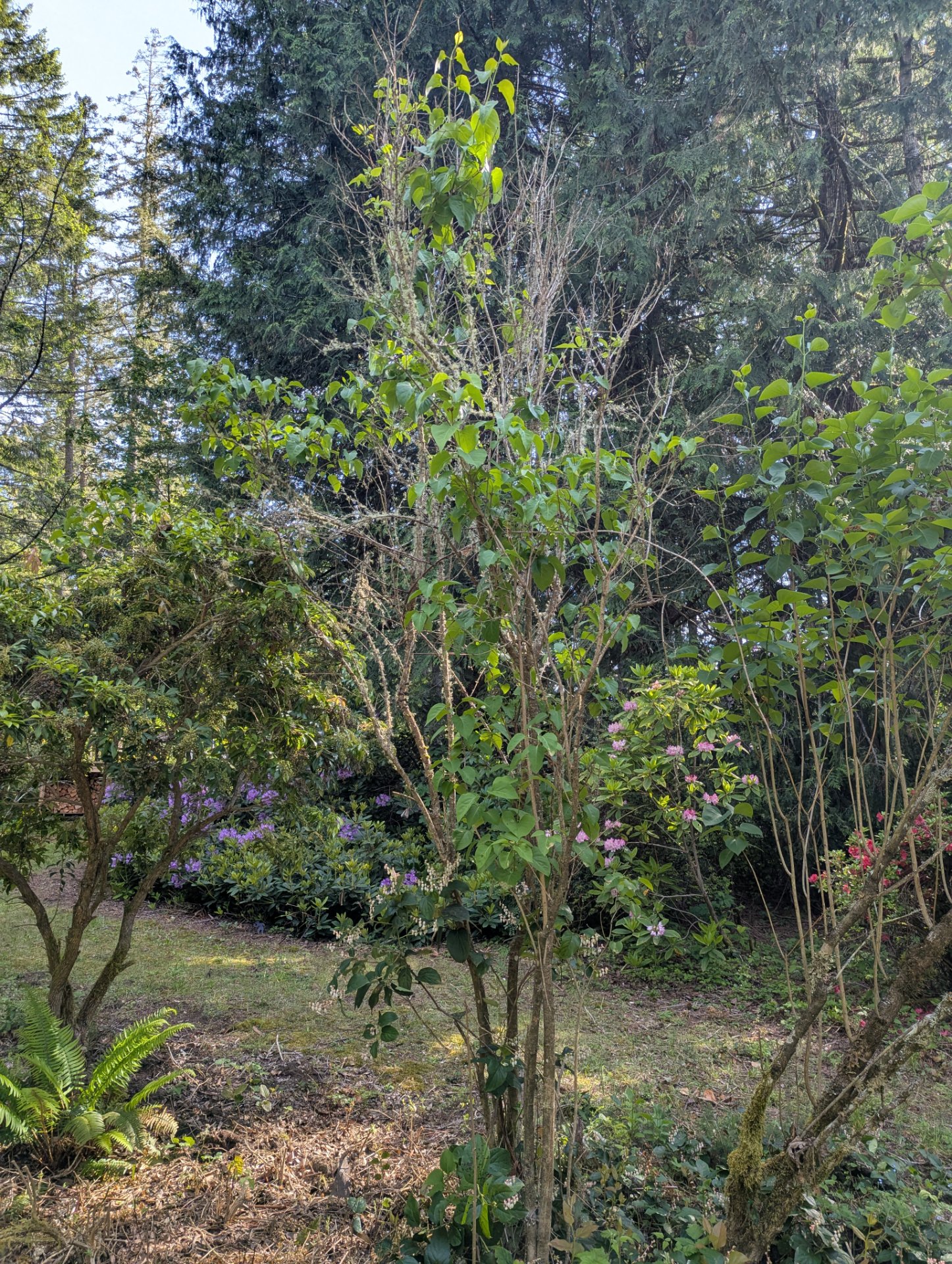
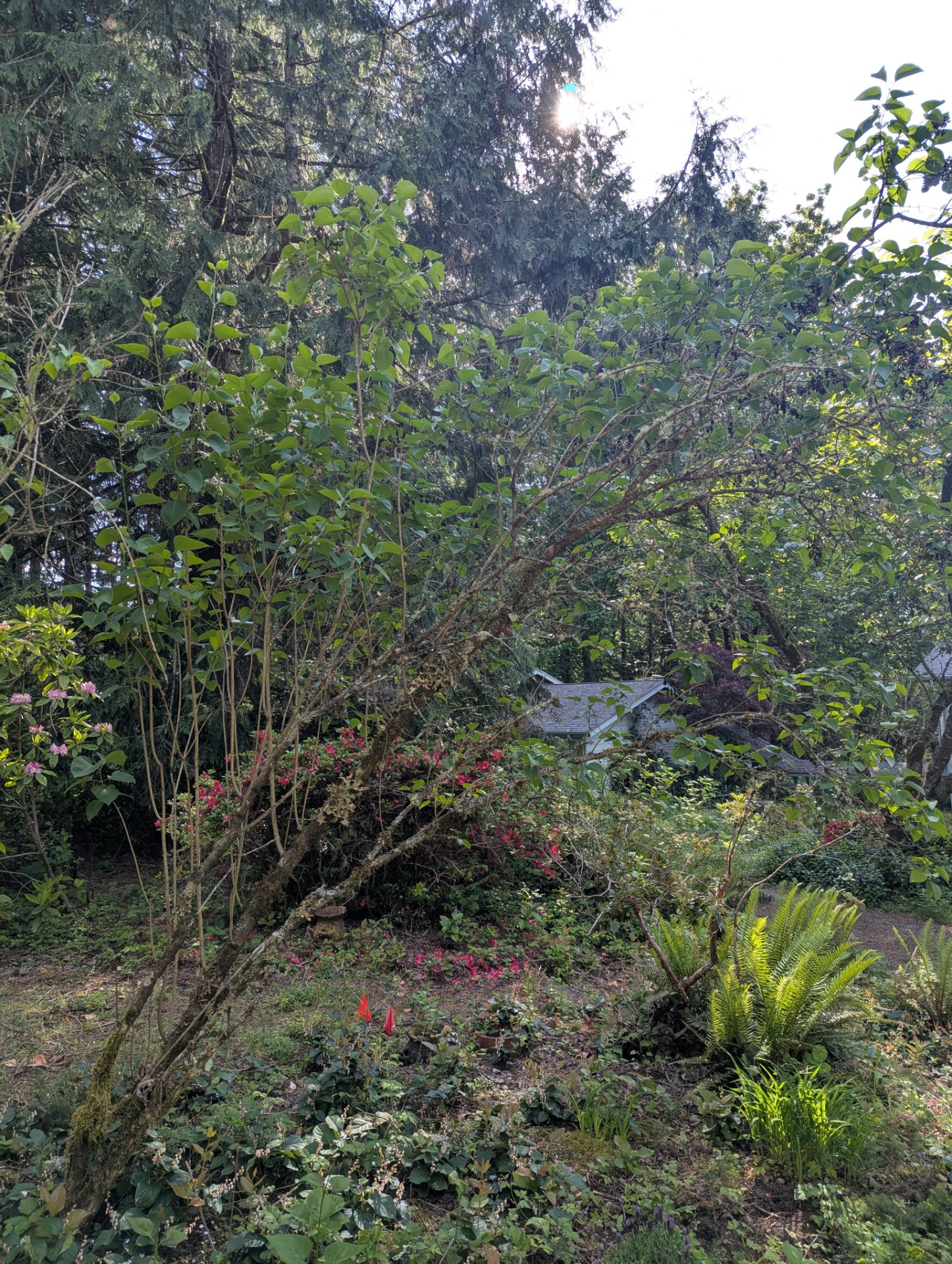
Photos: May 21, 2026 — two established but heavily neglected lilac shrubs. Both are multi-stemmed, leggy, with growth concentrated at the tops. The second specimen (right) is severely sprawling with a near-horizontal main branch.
About
Two well-established Syringa vulgaris shrubs that have been neglected for many years. Both show the classic signs of neglect: bare lower stems, all growth at the top, poor bloom, and unbalanced/leaning form. The leaning is almost certainly a light-seeking response over many years under the surrounding canopy.
Blooms were very poor in May 2026 despite a good flowering year across the rest of the garden — a clear sign the shrubs are exhausted and overcrowded.
Recovery Plan
Both shrubs are on a multi-year renewal programme started May 2026.
Specimen 1 (tall, leggy)
Approach: Selective hard pruning — keep the best 3–5 stems, cut the rest to the ground.
- Cut all stems except the 3–5 strongest, best-spaced, most vertical ones to ground level
- On the kept stems, cut back the top by ~1/3 to encourage branching lower down
- Prune right after blooms finish (late May/early June)
Specimen 2 (sprawling, severely neglected)
Approach: Full hard cut reset.
- Cut everything down to 6–12 inches
- Allow vigorous new growth to emerge from the base
- Select 3–5 strong new shoots to keep as the future framework; remove the rest as they develop
After pruning (both)
- Top dress with compost (keep away from stems)
- Apply a balanced fertiliser — avoid high-nitrogen (promotes leaves over blooms); 10-10-10 or higher phosphorus/potassium
- Keep well watered through first summer
Timeline
| Year | Expected |
|---|---|
| 2026 | Hard prune after bloom; strong new basal growth by late summer |
| 2027 | Little to no bloom; framework establishing |
| 2028 | First decent bloom on new wood |
| 2029+ | Full flowering display restored |
Ongoing Maintenance
Once recovered, prune lightly each year right after bloom:
- Deadhead spent flower heads
- Remove crossing, inward-growing, or weak stems
- 30 minutes/year prevents returning to this situation
Key Characteristics
- Type: Deciduous shrub, family Oleaceae
- Flowers: Late spring (May); highly fragrant; purple, mauve, white depending on cultivar
- Foliage: Heart-shaped, mid-green; unremarkable after bloom
- Size: Can reach 4–6 m if unpruned; best kept at 2–3 m
- Form: Naturally multi-stemmed; suckers freely from the base
Action Needed
- Prune both shrubs after bloom finishes (late May/early June 2026)
- Apply compost top-dress and fertiliser after pruning
- Photograph new basal growth late summer 2026
- Confirm cultivar — note flower colour (purple/mauve/white) before pruning
Sources & Verification
The recovery plan is based on standard horticultural guidance. Key claims and where to verify them:
High confidence — widely agreed upon
| Claim | Source to check |
|---|---|
| Lilacs bloom on old wood (why hard pruning kills blooms) | RHS — search “Syringa pruning”; Missouri Botanical Garden Plant Finder entry for Syringa vulgaris |
| Prune immediately after bloom for best results | Same as above; also OSU Extension (Oregon State) — relevant for PNW conditions |
| Renewal pruning: remove oldest 1/3 of stems per year over 3 years | RHS pruning guides; RHS Pruning & Training (Brickell & Joyce) — standard reference book |
| Hard cut to 6–18 inches for full reset | Iowa State University Extension; University of Minnesota Extension both cover rejuvenation of old lilacs specifically |
| High nitrogen promotes foliage over flowers | General for flowering shrubs; confirmed in RHS fertilising guidance |
Lower confidence — verify before relying on
| Claim | Caveat |
|---|---|
| ”First decent bloom by year 3” | Varies significantly by plant vigour, root mass, and climate. Some sources say 2 years, some say 4. Check UMN Extension lilac rejuvenation article — they give conservative estimates for cold climates. |
| ”10-10-10 or higher P/K” | Fertiliser ratios for lilacs are debated — some sources just say avoid excess nitrogen rather than specifying a ratio. Worth reading RHS or your local extension service for region-specific advice. |
Good starting points
- RHS (rhs.org.uk) — search “Syringa” and “renovation pruning shrubs”
- Missouri Botanical Garden Plant Finder — search Syringa vulgaris; good general profile
- University of Minnesota Extension — specifically covers lilac rejuvenation, relevant climate (cold winters similar to PNW)
- OSU Extension (extension.oregonstate.edu) — Pacific Northwest specific; search “lilac pruning”
- RHS Pruning & Training by Brickell & Joyce — the standard reference book for this kind of work