Pink Camellia
Camellia japonica — likely ‘Pink Perfection’ (syn. ‘Otome’)
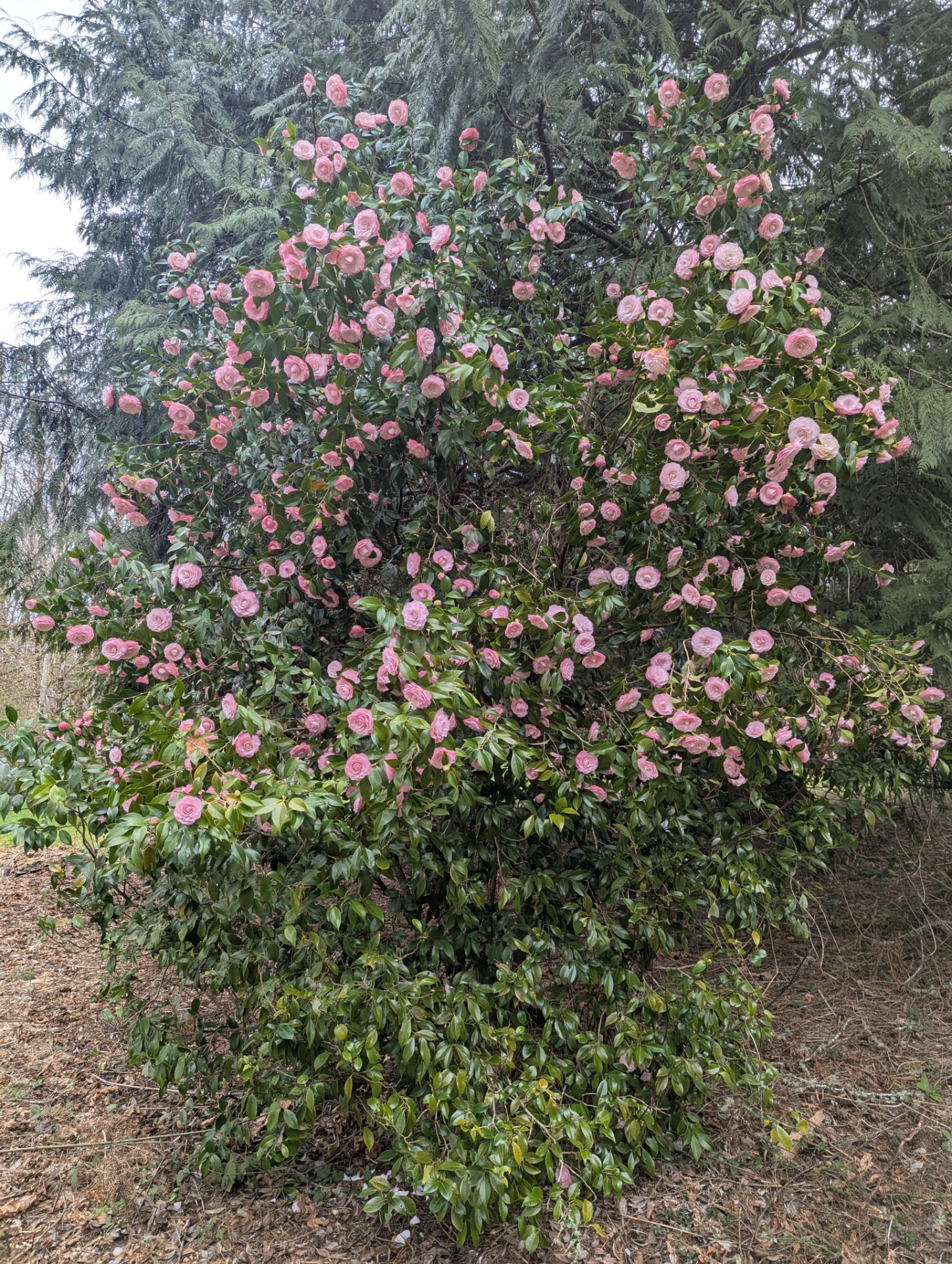
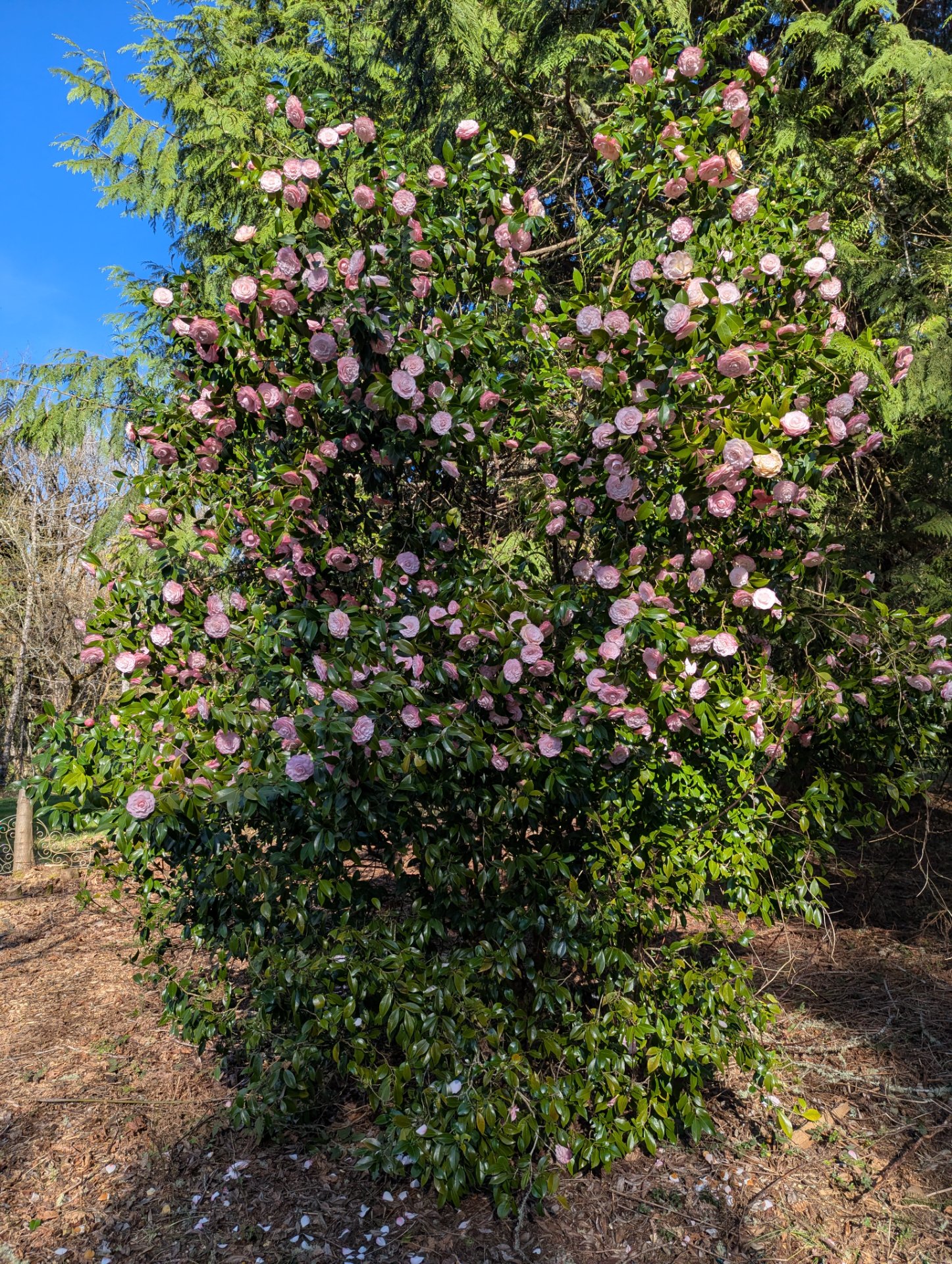
A large, free-standing camellia off on its own (not part of a named garden area). Roughly 12 ft tall, multi-stemmed, with a sheltering backdrop of cedars. Not the same plant as the Monkey Puzzle Strip camellia.
About
- Flowers: soft shell-pink, formal double — tight, neatly overlapping petals in a spiral. Heavy bloom in late March 2026.
- Cultivar: best guess is ‘Pink Perfection’, the classic shell-pink formal double common in Pacific Northwest gardens. Several cultivars look similar, so treat as unconfirmed.
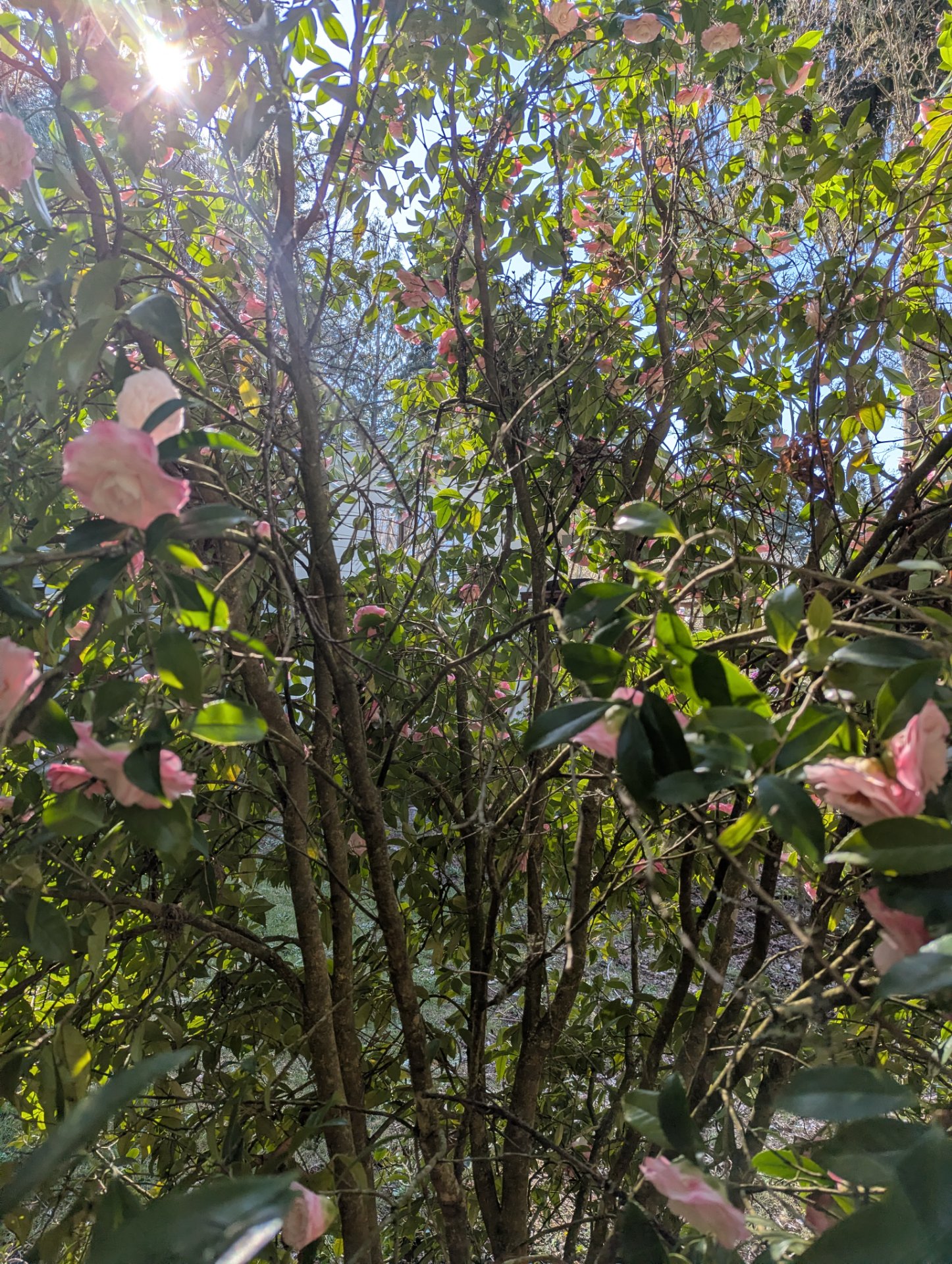
- Form: many upright stems from a single base, open interior, smooth pale bark. Lower stems are mostly bare below waist height.
- Deer: browse the flowers they can reach.
Plan: train as a multi-trunk small tree
Given its size, its existing upright stems, and deer eating the low flowers, the plan is to lean into a tree form — canopy held up on clean trunks rather than a shrub leafy to the ground.
Now (October) — damage cleanup only
Flower buds for next spring are already set, so remove only what is damaged:
- Cut off broken, cracked, or half-torn branches — back to a healthy side branch or just outside the branch collar. Clean cuts, no stubs, no wound paint. (Done Oct 24.)
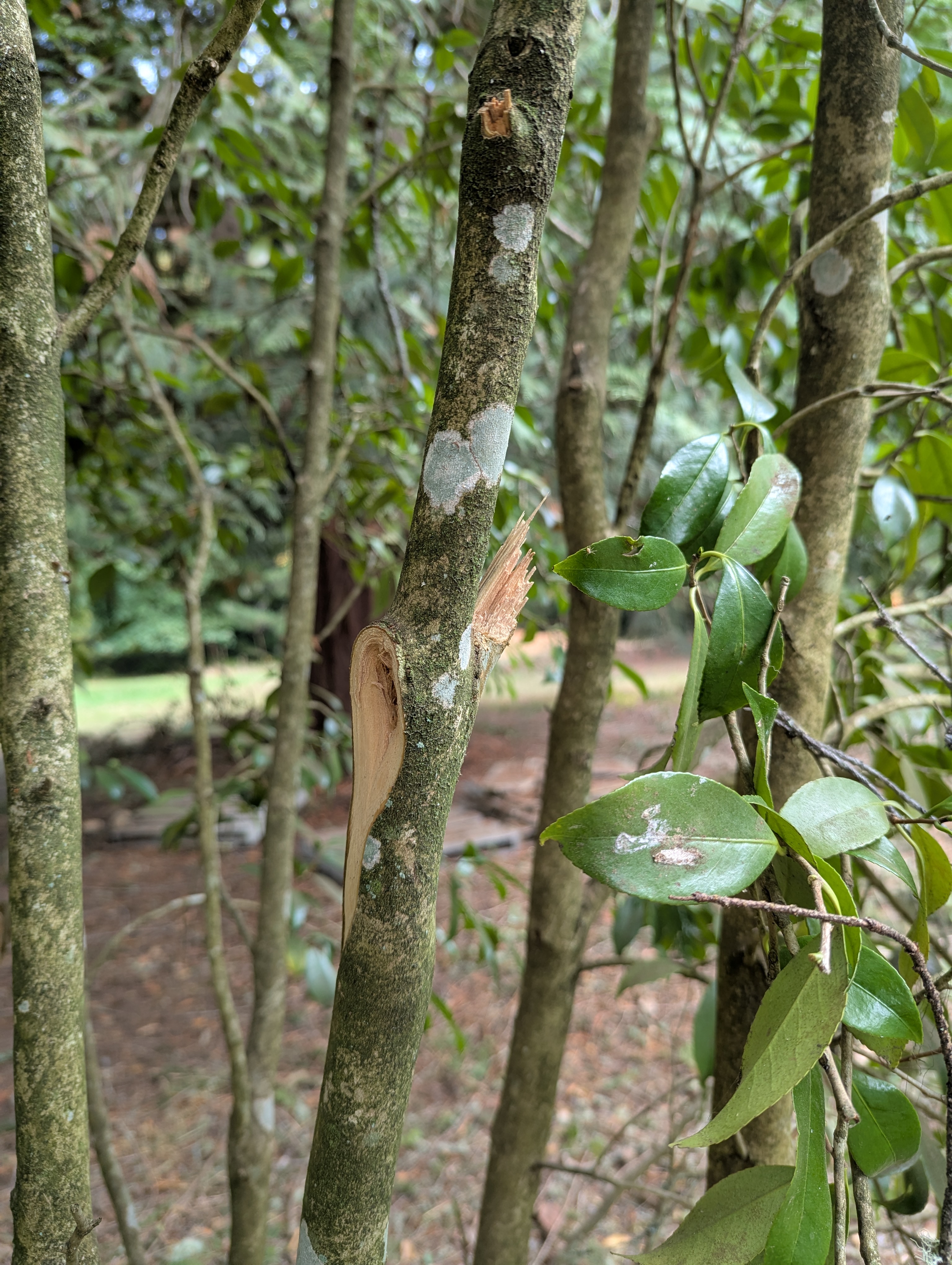
- Neaten the torn bark on the upright stem (about chest height) — trim ragged edges with a sharp knife, don’t enlarge the wound.
- Wounded offshoot stem (see Oct 24 photos): keep for now. Cut the shredded side-branch stubs and the splinter on the lower tear-out back flush with the stem. Check how far around the stem the bark is missing; if it’s more than about half, plan to remove the stem in spring.
- Lift bent-but-intact branches off the ground; keep them if uncracked (tie up loosely if sagging).
- Leave all healthy wood alone until after flowering.
After flowering (April–May 2027) — reshape
Best time to prune camellias: flowers are done and next year’s buds don’t form until summer. Camellias tolerate hard pruning and resprout from old wood.
- Wounded offshoot stem: leaning toward removing it for the long-term shape. Removal frees space and light for the bigger trunk it branches from, and the three wound scars on it will always show. Size: about 1.5”, against a 2–3” parent, so it’s between an offshoot and a second trunk. If the parent is nearer 3”, remove the offshoot in one go. If nearer 2”, shorten it by about half to a side branch this spring and remove the rest in spring 2028. Use the three-cut method so the weight can’t tear bark down the parent. Make the final cut just outside the branch bark ridge, angled away from the parent, not flush. After cutting, keep only the best-placed new shoots from the parent trunk and rub off the rest. Keep it instead only if removing it would leave an obvious hole in the canopy. If the foliage above the wound has wilted, yellowed or died back, remove it regardless. Health signs to compare against the rest of the plant: leaf colour and gloss, drooping on warm days, buds dropping or not opening, and a weaker spring growth flush. Also check the wounds: a rolled ridge forming at the edges is healing; dark, sunken or oozing bark is a bad sign.
- Remove low twiggy shoots and low side branches from the lower trunks
- Pick the best-spaced main stems; remove any crossing or crowding ones
- Balance the canopy where the fallen branches left gaps
- Photograph the flowers up close to help confirm the cultivar
Photos
March 2026 — in bloom
Taken on different days in late March, from different sides of the plant.
October 21, 2026 — branch damage
Branches fell on the camellia. Several limbs were knocked down to the ground, and one upright stem has torn bark.

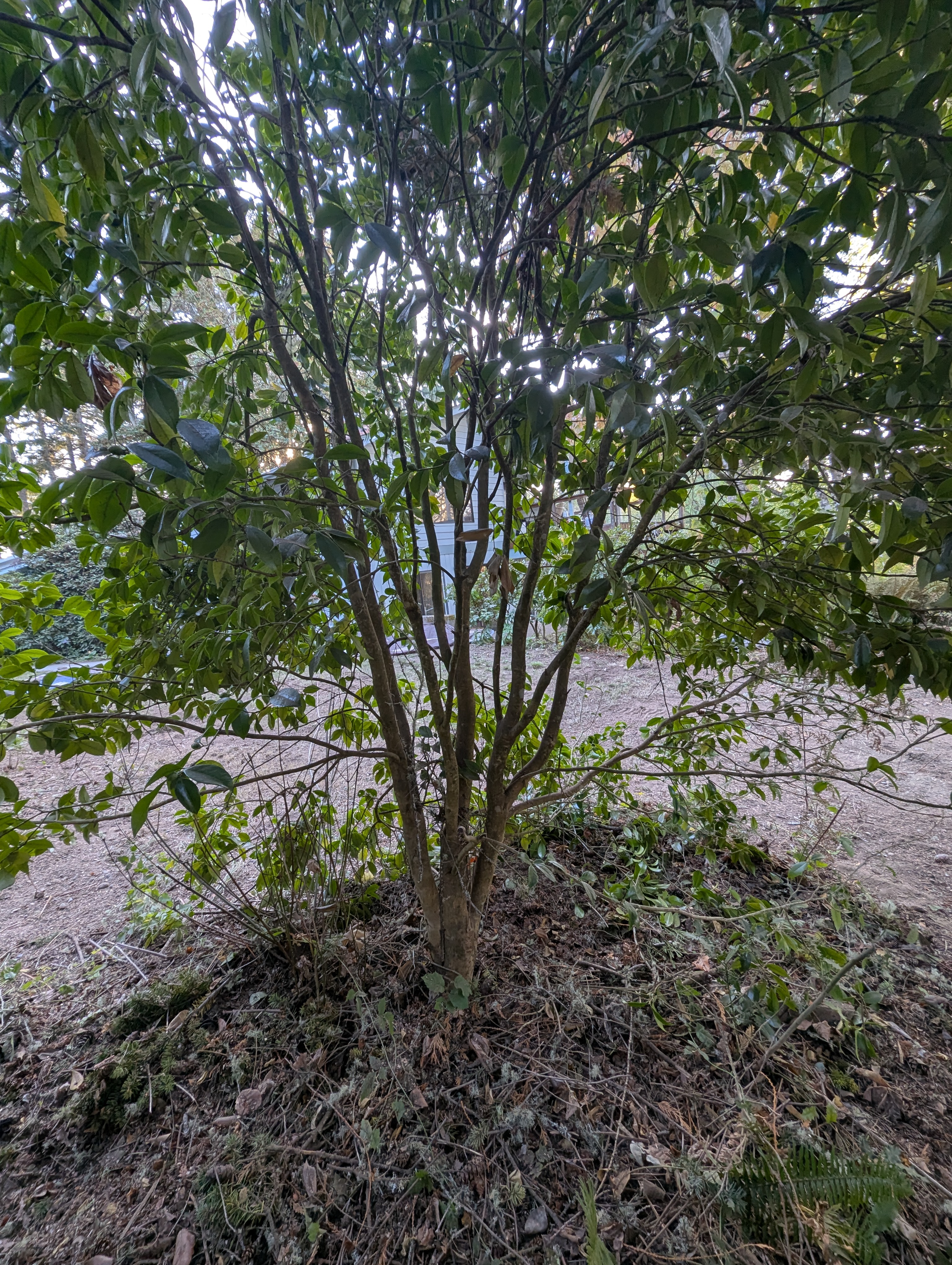
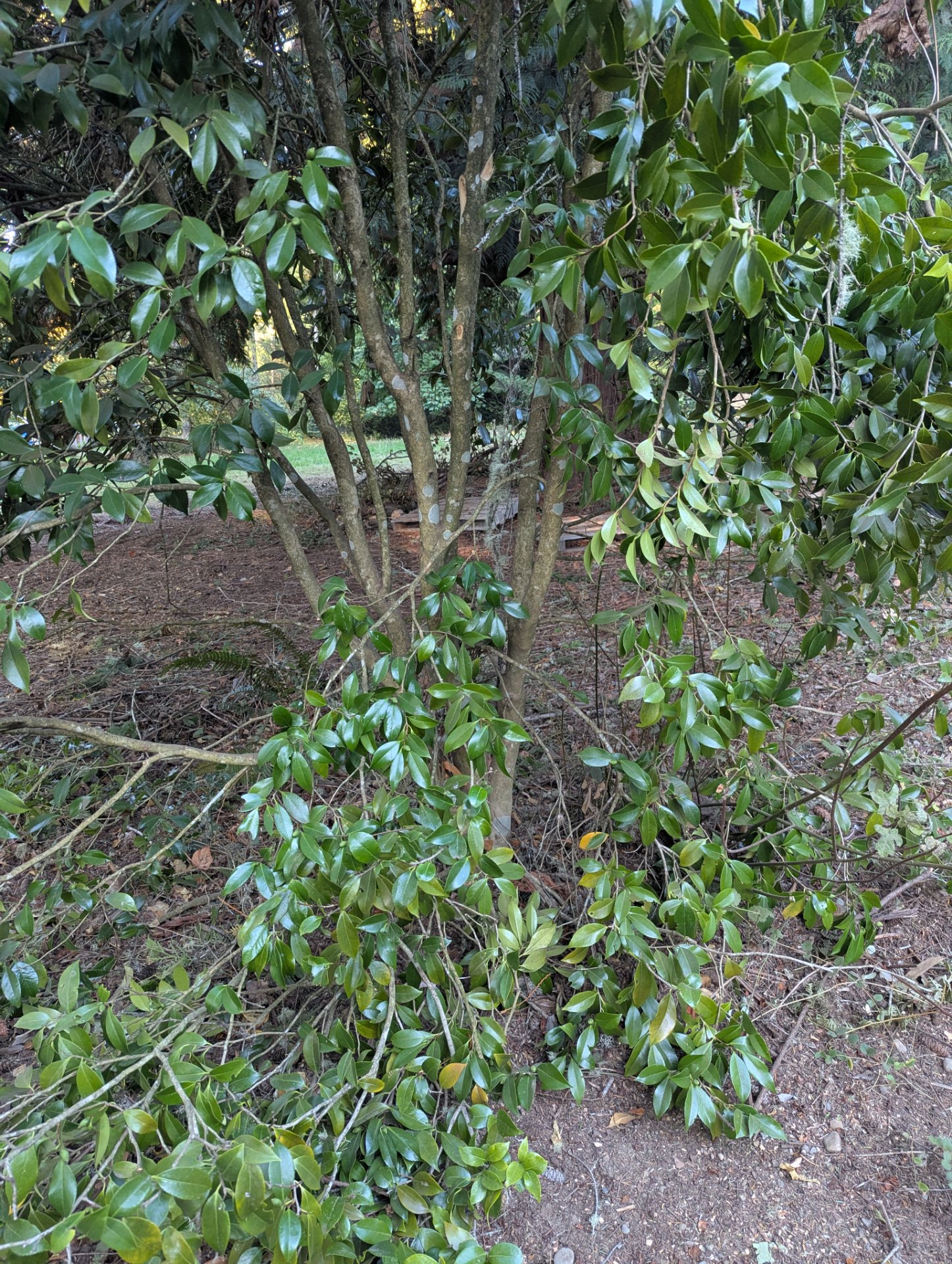
October 24, 2026 — after cleanup
Damaged branches removed. One offshoot stem coming off a bigger trunk is left with a long strip of bark stripped away and two side branches torn off at the stem. The bark edges around the wound are clean. The stem’s foliage at the top is still healthy.
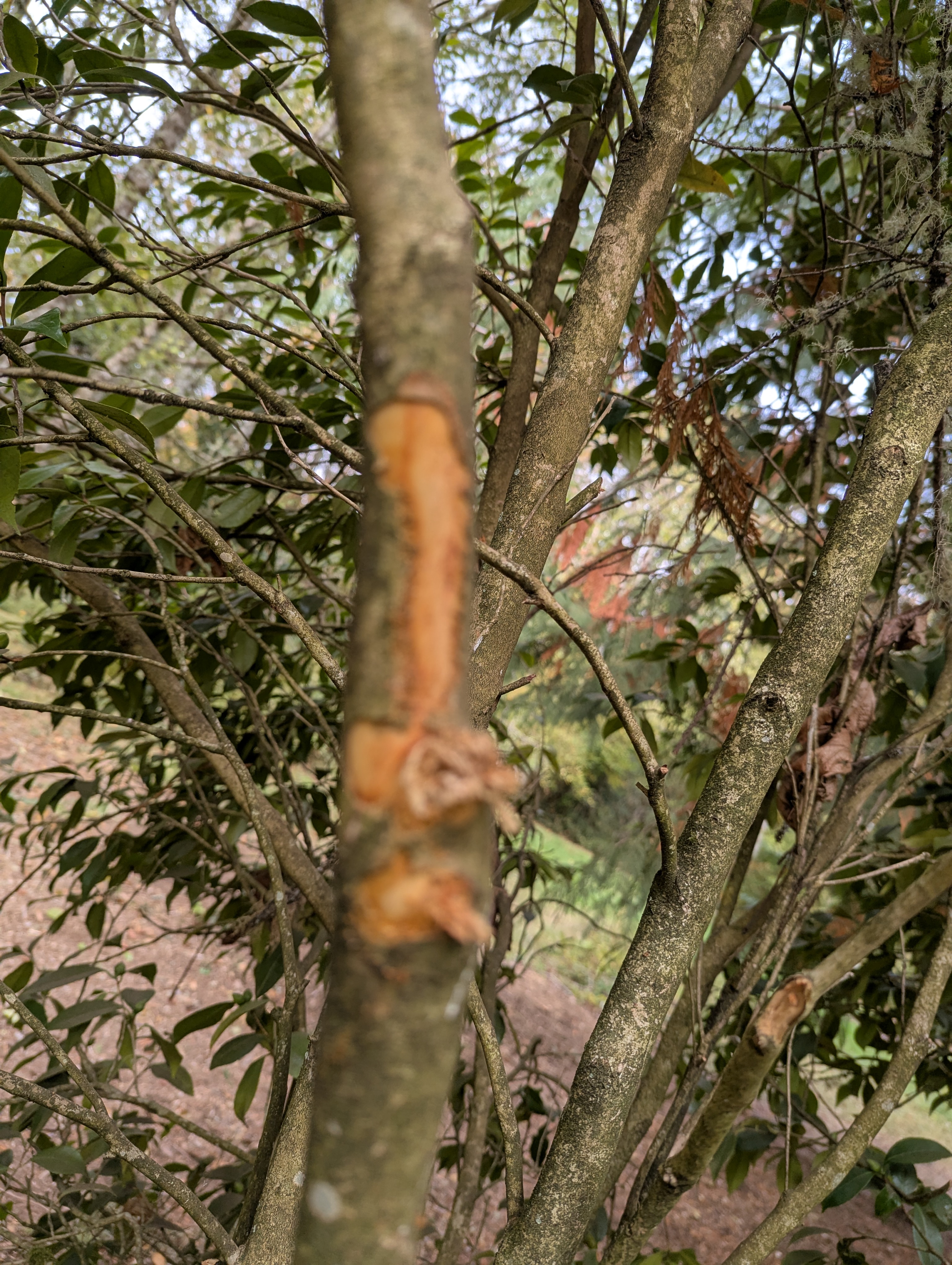

About a foot lower on the same stem, a side branch tore out and stripped a long sliver of bark and wood down the stem, leaving a splinter sticking up. With this one, the stem has three wounds in under two feet, so it’s more likely to come out in spring.